One Word, Six Areas: Understanding the 2026 Ofsted Inspection Framework in the Day Nursery
Notice, Include, Interact, Know, Regulate and Connect: six everyday words that translate the 2026 Ofsted early years inspection toolkit into day-nursery practice, with the research behind each one.
Written byAbraham
Published
Reading time12 min read
Introduction
For many day-nursery practitioners, the word Ofsted can create anxiety. However, inspection is not about practitioners performing differently for an inspector. The 2026 Ofsted inspection approach focuses on understanding children's typical experience and the quality and impact of leaders' choices and actions. Inspectors use the Early Years Inspection Toolkit alongside the operating guide, professional curiosity and professional judgement. Importantly, Ofsted states that the toolkit is not a checklist.
The current inspection toolkit, used from 1 September 2026, evaluates seven areas: safeguarding, inclusion, curriculum and teaching, achievement, behaviour, attitudes and establishing routines, children's welfare and wellbeing, and leadership and governance.
For practitioners, these can be remembered through six simple words: Notice, Include, Interact, Know, Regulate and Connect. Leadership and governance underpin all six. These words translate the inspection framework into everyday nursery practice.
1. NOTICE — Safeguarding
Safeguarding begins with knowing and noticing children.
The 2026 toolkit places significant emphasis on an open and positive safeguarding culture and on practitioners' responsibilities to protect children from harm. Inspectors consider whether safeguarding arrangements are effective and whether staff understand their responsibilities.
For practitioners, safeguarding is much more than completing training or knowing the name of the designated safeguarding lead. It means recognising when something about a child is different. A practitioner who knows a child well may notice a change in behaviour, communication, appearance, relationships or emotional presentation.
Attachment and relationship research helps explain why sensitive adults are important. Palermo et al. (2007) found associations between close teacher-child relationships and preschool children's academic readiness.
Practical action: Know your key children. Notice changes. Listen carefully. Record concerns accurately. Follow the nursery's safeguarding procedures and share concerns with the appropriate safeguarding lead.
Safeguarding is therefore not an activity that happens only when an inspector arrives; it is embedded in everyday professional curiosity.
2. INCLUDE — Inclusion
The second word is include.
Ofsted's 2026 toolkit gives inclusion a distinct evaluation area. Inspectors consider the experiences and outcomes of disadvantaged children, children with SEND, children known to children's social care and children who face other barriers to learning or wellbeing.
Inclusion is not simply having a child physically present in the room. A child is included when they can participate, communicate, develop relationships and access the curriculum.
Langeloo et al. (2019), in a systematic review of 31 studies, highlighted the importance of teacher-child interactions for multilingual young children.
Practitioners can support inclusion by adapting language, using visual resources, allowing additional processing time, providing sensory opportunities and modifying activities. A child with SEND may need a different route to the same learning intention.
Practical action: Instead of asking, “Why can't this child join in?”, ask, “What can I change so that this child can participate?”
This represents an important shift from viewing the child as the problem to examining the environment, adult interaction, and learning experience.
3. INTERACT — Curriculum and Teaching
The third word is interact.
The 2026 toolkit examines curriculum and teaching through children's experiences and the impact of educational provision. Inspectors may observe children and practitioners during play, routines and planned experiences and consider how well children develop across the seven areas of learning and development.
Research strongly supports the importance of interactions. Hamre et al. (2014) identified emotional support, classroom organisation and instructional support as important dimensions of teacher-child interaction. Similarly, Perlman et al. (2016) found small associations between interaction quality and child outcomes in their systematic review and meta-analysis.
This means that teaching in a nursery does not always look like an adult standing at the front of a group. Teaching can happen while building a tower, preparing food, reading a story, changing a nappy or exploring outdoors.
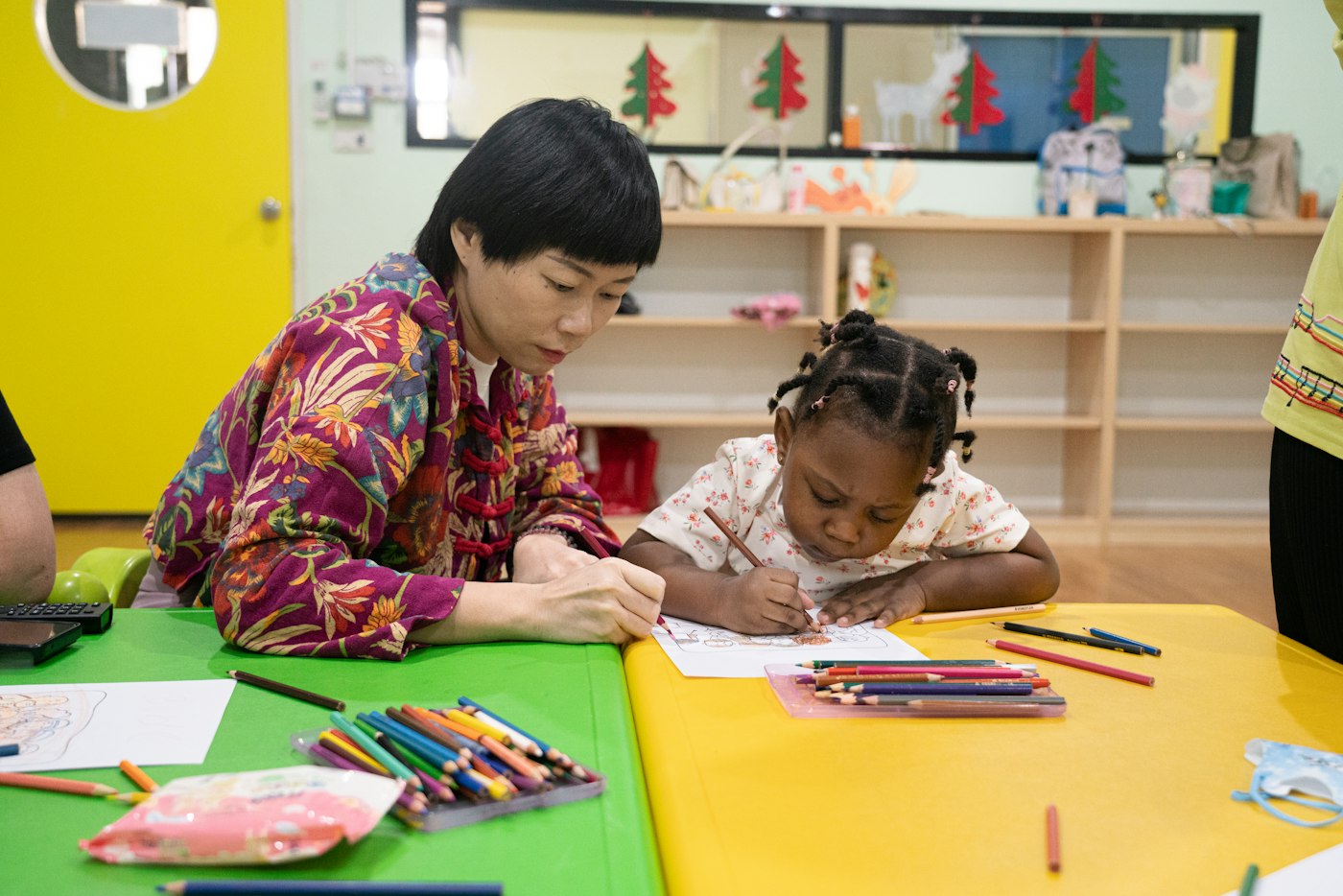
Teaching often happens in everyday moments alongside the child. Photo: Amonwat Dumkrut on Unsplash
For example, rather than simply saying, “That's a big tower,” the practitioner might ask, “What could we do to stop it falling?” This encourages children to predict, reason, and solve problems.
Practical action: Talk with children, model vocabulary, extend their thinking, demonstrate new skills, and follow their interests while maintaining clear curriculum intentions.
Professional development is also important. Egert, Dederer and Fukkink (2020) found that in-service professional development can improve teacher-child interaction quality, particularly where professional learning includes reflection and individual support.
4. KNOW — Achievement
The fourth word is know.
Practitioners cannot support children's progress effectively unless they know the children as individuals. Achievement in early childhood is not simply about producing written evidence or completing activities. It concerns children's developing knowledge, skills and confidence. Ofsted's operating guide explicitly describes the purpose of children's achievement in these terms.
Research supports the importance of process quality. Ulferts, Wolf and Anders (2019) examined 17 longitudinal studies involving more than 16,000 children and found small but lasting associations between process quality in early childhood education and later language, literacy and mathematics outcomes.
Practitioners therefore need to know:
what children already understand;
what they are currently learning;
where they experience difficulty;
what interests motivate them;
what vocabulary they use;
and what support or challenge might help them progress.
Shared reading provides a particularly useful example. Dowdall et al. (2020) found small positive effects of shared picture-book interventions on children's expressive and receptive language.
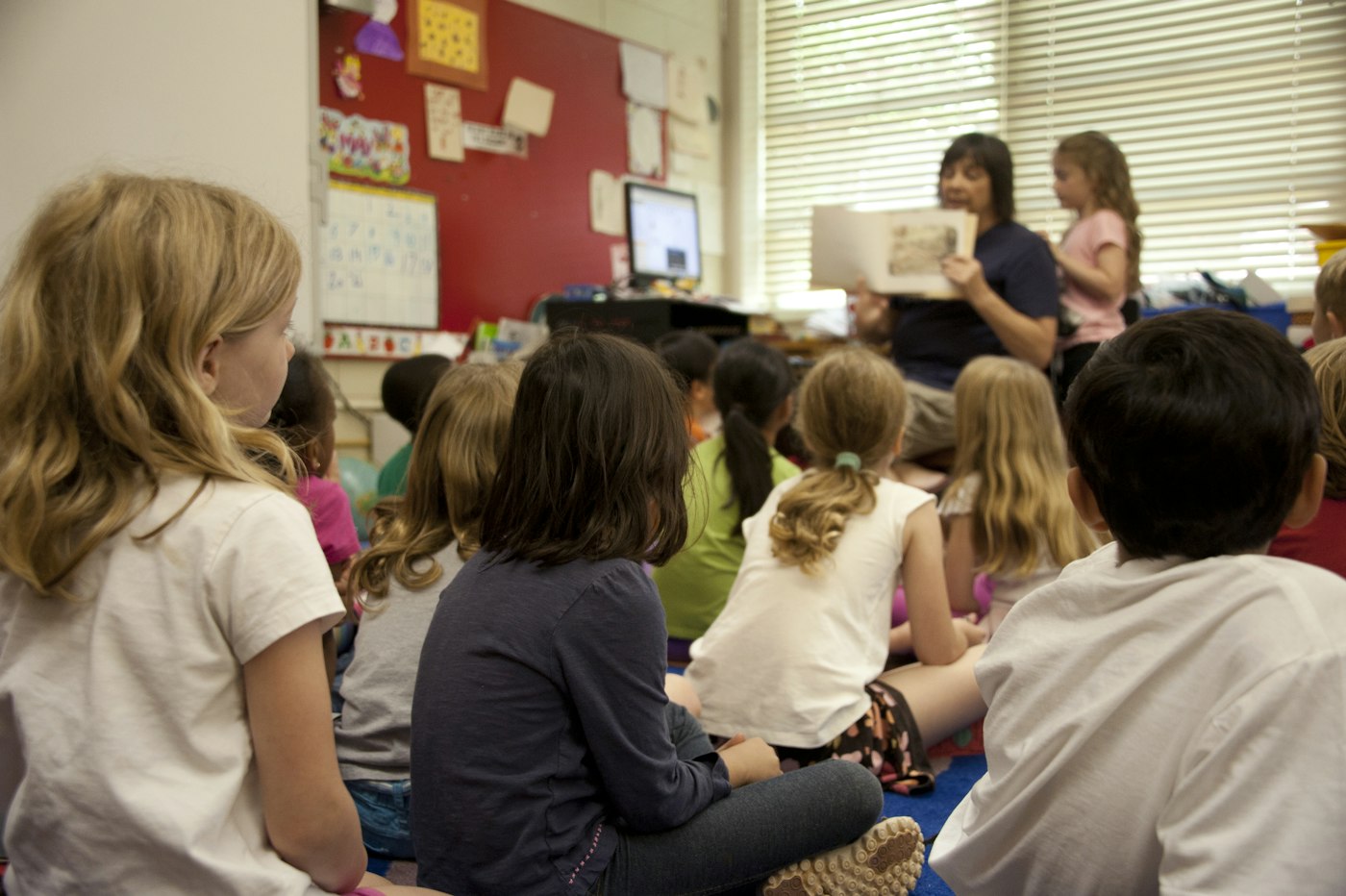
Shared reading supports children's expressive and receptive language. Photo: CDC on Unsplash
Practical action: Use everyday experiences to develop vocabulary, mathematical thinking, communication, physical development, literacy and understanding of the world.
5. REGULATE — Behaviour, Attitudes and Routines
The fifth word is regulate.
Young children are still developing the ability to manage emotions, attention, impulses and behaviour. Therefore, practitioners should not simply expect children to regulate themselves; they should teach and support regulation.
Muir, Howard and Kervin (2023) reviewed interventions targeting self-regulation and executive functioning in preschool settings, demonstrating the importance of intentional approaches to developing these abilities.
The 2026 toolkit specifically considers behaviour, attitudes, and establishing routines.
Effective routines provide predictability. Children benefit from knowing what happens next and understanding boundaries. Practitioners can support regulation through visual timetables, consistent language, transition warnings, movement opportunities and calm adult responses.
Practical action: Teach children what they can do rather than focusing only on what they must stop doing.
For example, instead of repeatedly saying “Don't push,” a practitioner might say, “Your friend is using the bike. You can wait here, or choose another bike.”
This approach combines boundaries with teaching.
6. CONNECT — Welfare and Wellbeing
The sixth word is connect.
Children's welfare and wellbeing are central to high-quality early-years provision. The 2026 toolkit includes children's welfare and wellbeing as a separate evaluation area. Recent updates specifically strengthened the toolkit's expectations around babies' safe sleeping, weaning and safer eating arrangements.
Wellbeing is also relational. Sluiter, Fukkink and Fekkes (2025), in a meta-analysis of longitudinal studies, found a small but significant association between process quality in early childhood education and children's later socio-emotional development.
Children need adults who respond sensitively to their emotional and physical needs. This includes greeting children warmly, listening to them, supporting friendships, respecting children's choices where appropriate, and providing consistent care routines.
Outdoor experiences are also important. Research indicates that features of early-years outdoor environments can influence opportunities for physical activity, motor competence and social interaction.
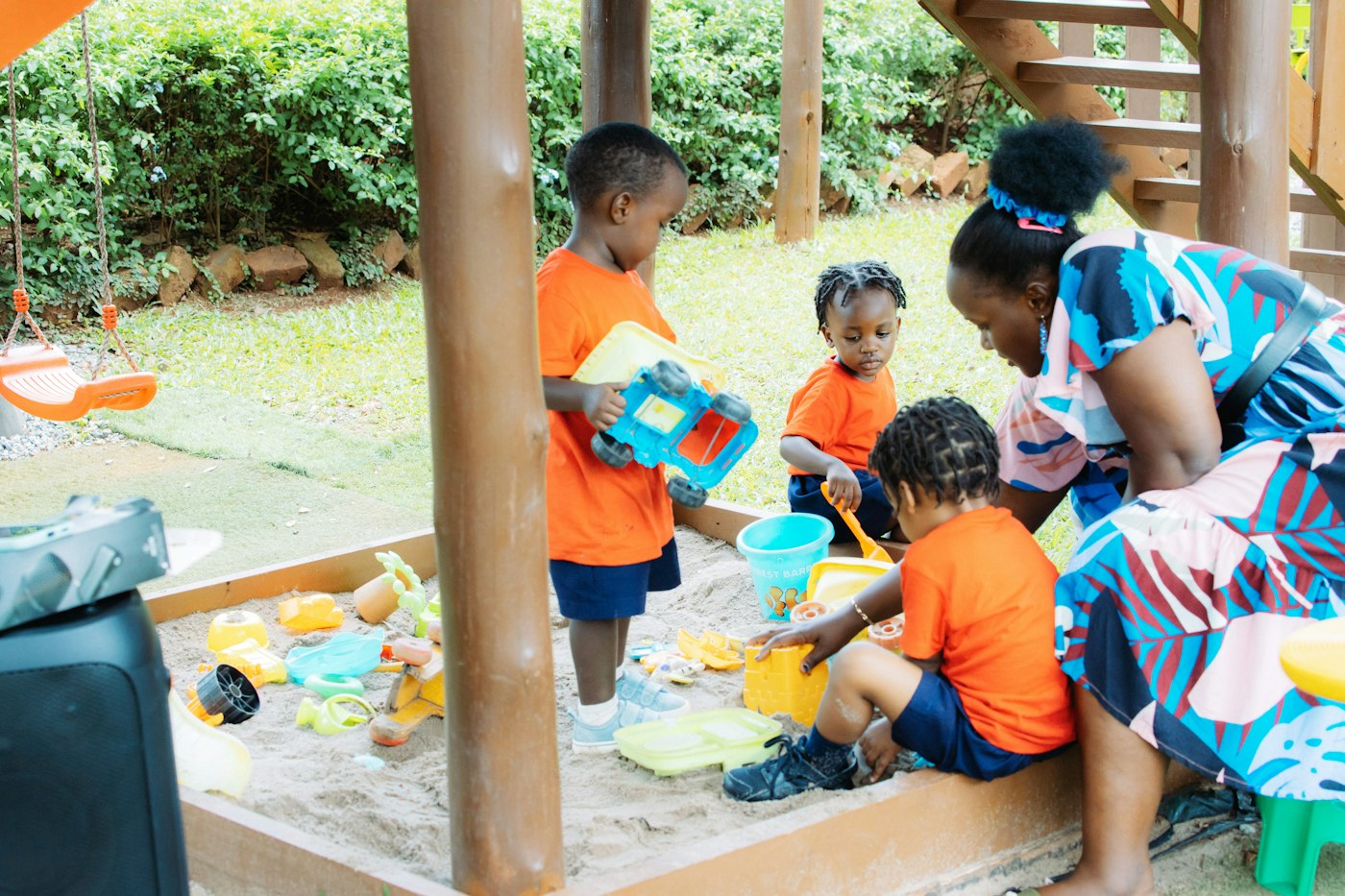
Outdoor environments create opportunities for physical activity and social interaction. Photo: Rewired Digital on Unsplash
Practical action: Ask yourself, “Does this child feel safe, valued, listened to and able to belong here?”
Leadership Underpins Everything
Although this article uses six words for practitioners, the 2026 Ofsted framework contains a seventh evaluation area: leadership and governance.
Leadership should therefore not be seen as something separate from practice. Leaders establish the culture in which practitioners work.
The inspection operating guide states that inspectors connect evidence from different inspection activities and consider whether the evidence represents the setting's typical practice. They begin with the expected standard and consider whether the evidence provides a secure fit against the relevant standards.
This has an important practical implication: staff should not attempt to memorise answers for an inspection. Instead, they should understand why they do what they do.
A practitioner should be able to explain how they support a particular child, why a particular activity has been chosen, how they adapt provision, how they promote communication and how they know children are progressing.
Conclusion
The 2026 Ofsted framework can appear complex, but day-to-day practice can be remembered through six words:
These words do not replace Ofsted's seven official evaluation areas. Instead, they translate the framework into language that practitioners can use in everyday practice. Leadership and governance provide the foundation that connects them all.
Most importantly, the 2026 toolkit should not become a checklist. Ofsted itself makes this clear.
The strongest preparation for inspection is therefore not creating evidence solely for an inspector. It is developing a nursery where high-quality practice is consistent, understood by staff, responsive to individual children and visible in children's everyday experiences.
In other words, the aim should not be to look good for Ofsted. The aim should be to provide children with experiences that demonstrate what high-quality early education and care actually means.
About this article. This article is deliberately written so that a day-nursery practitioner can use it for professional development, while the academic literature provides the theoretical justification. It also distinguishes the six practitioner words from Ofsted's seven official evaluation areas, which is important as it is being used for staff training.
References: Peer-Reviewed Articles
Dowdall, N., Melendez-Torres, G.J., Murray, L., Gardner, F., Hartford, L. and Cooper, P.J. (2020) ‘Shared picture book reading interventions for child language development: A systematic review and meta-analysis’, Child Development, 91(2), pp. e383–e399.
Egert, F., Dederer, V. and Fukkink, R.G. (2020) ‘The impact of in-service professional development on the quality of teacher-child interactions in early education and care: A meta-analysis’, Educational Research Review, 29, 100309.
Falenchuk, O., Perlman, M., McMullen, E., Fletcher, B. and Shah, P.S. (2017) ‘Education of staff in preschool aged classrooms in child care centers and child outcomes: A meta-analysis and systematic review’, PLOS ONE, 12(8), e0183673.
Hamre, B.K., Hatfield, B., Pianta, R.C. and Jamil, F.M. (2014) ‘Evidence for general and domain-specific elements of teacher-child interactions: Associations with preschool children's development’, Child Development, 85(3), pp. 1257–1274.
Langeloo, A., Mascareño Lara, M., Deunk, M.I., Klitzing, N.F. and Strijbos, J.W. (2019) ‘A systematic review of teacher-child interactions with multilingual young children’, Review of Educational Research, 89(4), pp. 536–568.
Linnavalli, T., Putkinen, V., Lipsanen, J., Huotilainen, M. and Tervaniemi, M. (2018) ‘Music playschool enhances children's linguistic skills’, Scientific Reports, 8, 8767.
Muir, R.A., Howard, S.J. and Kervin, L. (2023) ‘Interventions and approaches targeting early self-regulation or executive functioning in preschools: A systematic review’, Educational Psychology Review, 35, 27.
Neale, D. and Pino-Pasternak, D. (2017) ‘A review of reminiscing in early childhood settings and links to sustained shared thinking’, Educational Psychology Review, 29, pp. 641–665.
Noble, C., Sala, G., Peter, M., Lingwood, J., Rowland, C., Gobet, F. and Pine, J. (2019) ‘The impact of shared book reading on children's language skills: A meta-analysis’, Educational Research Review, 28, 100290.
Palermo, F., Hanish, L.D., Martin, C.L., Fabes, R.A. and Reiser, M. (2007) ‘Preschoolers' academic readiness: What role does the teacher-child relationship play?’, Early Childhood Research Quarterly, 22(4), pp. 407–422.
Perlman, M., Falenchuk, O., Fletcher, B., McMullen, E., Beyene, J. and Shah, P.S. (2016) ‘A systematic review and meta-analysis of a measure of staff/child interaction quality (the Classroom Assessment Scoring System) in early childhood education and care settings and child outcomes’, PLOS ONE, 11(12), e0167660.
Perlman, M., Fletcher, B., Falenchuk, O., Brunsek, A., McMullen, E. and Shah, P.S. (2017) ‘Child-staff ratios in early childhood education and care settings and child outcomes: A systematic review and meta-analysis’, PLOS ONE, 12(1), e0170256.
Purdon, A. (2016) ‘Sustained shared thinking in an early childhood setting: An exploration of practitioners' perspectives’, Education 3–13, 44(3), pp. 269–282.
Savina, E. (2021) ‘Self-regulation in preschool and early elementary classrooms: Why it is important and how to promote it’, Early Childhood Education Journal, 49, pp. 493–501.
Sluiter, R.M.V., Fukkink, R.G. and Fekkes, M. (2025) ‘The impact of process quality in early childhood education and care on socio-emotional development: A meta-analysis of longitudinal studies’, International Journal of Environmental Research and Public Health.
Sylva, K., Siraj-Blatchford, I., Taggart, B., Sammons, P., Melhuish, E., Elliot, K. and Totsika, V. (2006) ‘Capturing quality in early childhood through environmental rating scales’, Early Childhood Research Quarterly, 21(1), pp. 76–92.
Ulferts, H., Wolf, K.M. and Anders, Y. (2019) ‘Impact of process quality in early childhood education and care on academic outcomes: Longitudinal meta-analysis’, Child Development, 90(5), pp. 1474–1489.
Vandell, D.L., Burchinal, M., Vandergrift, N., Belsky, J. and Steinberg, L. (2010) ‘Do effects of early child care extend to age 15 years? Results from the NICHD Study of Early Child Care and Youth Development’, Child Development, 81(3), pp. 737–756.
von Suchodoletz, A., Lee, D.S., Henry, J., Tamang, S. et al. (2023) ‘Early childhood education and care quality and associations with child outcomes: A meta-analysis’, PLOS ONE, 18(6), e0285985.
Xiaoduo Li, L. and Pang, V.H.K. (2026) ‘The effects of shared book reading on language and literacy development of ESL/EFL learners: A multi-level meta-analysis’, European Early Childhood Education Research Journal, 34(2), pp. 306–323.
Ofsted policy sources
Ofsted (2026) Early years inspection toolkit: For use from 1 September 2026. Updated June 2026, version 2.0. GOV.UK.
Ofsted (2026) Early years inspection operating guide for inspectors: For use from September 2026. Updated 28 August 2026. GOV.UK.
Ofsted (2026) Early years inspection: toolkit, operating guide and information. Updated 28 August 2026. GOV.UK.
Ofsted (2026) Summary of changes: September 2026. GOV.UK.
Operations Director, Awake Early Years Consultancy
Former Ofsted Early Years Inspector, doctoral researcher and early childhood education and care consultant with over 16 years' experience across practice, inspection and leadership.